
The Souvenir That Sent Me Down a Math Rabbit Hole
Fractals - The Great Wave off Kanagawa
9/20/20251 min read
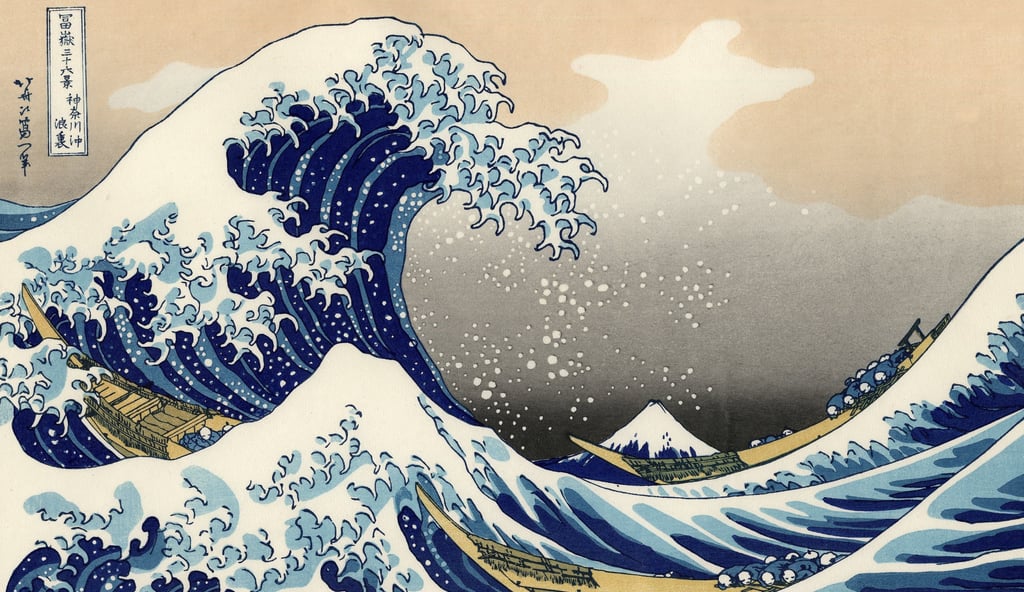
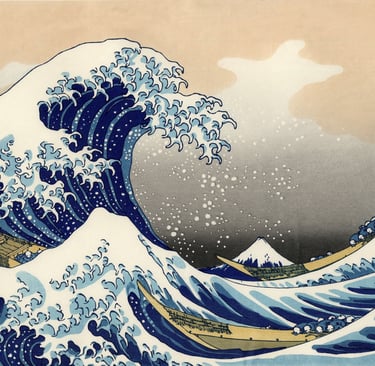
My brother brought back a souvenir from Japan, a small print of Hokusai's ‘The Great Wave off Kanagawa’. He stuck it on his desk like decoration. I couldn't stop staring at it.
There was something about that wave. The curl at the top, the smaller waves echoing the larger one, the foam breaking into tiny clawlike tips. It felt mathematical. Like the ocean was following a rule I didn't have the vocabulary for yet.
So, I looked it up. And I found fractals.
Hokusai painted ‘The Great Wave’ around 1831. Mandelbrot wouldn't formally define fractal geometry until 1975. But Hokusai had spent his life obsessively studying nature, and it showed. The large wave contains smaller waves. Those contain smaller ones still. Each curl echoes the shape of the whole. That's fractal structure found not through equations but through pure, relentless looking.
This is exactly what I keep discovering in my own research. The lotus leaf repeats its surface structure at two scales to create super-hydrophobicity. Gecko feet branch from large to small to generate adhesion. Nature writes in self-similarity, and the most observant artists were already fluent readers of it, centuries before the mathematics existed.
Hokusai didn't know what a fractal was. He just looked at the ocean honestly enough that the math came through anyway.
My brother's souvenir is on my desk now.
Picture Courtesy - www.pixabay.com